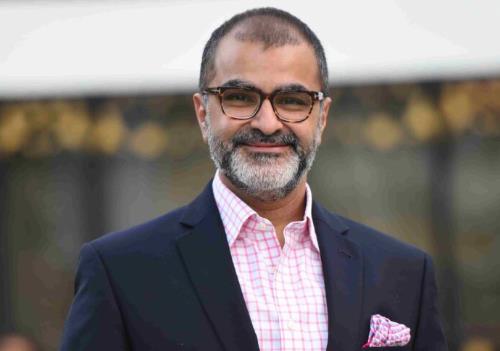
A January Trio: Asad Lalljee on Royal Opera House Mumbai’s International Classical Showcase
21-Jan-2026 | Source: eventfaqs.com
The Royal Opera House, Mumbai, is set to open the year on an elevated note with a specially curated month-long programming initiative featuring three international Western classical performances this January. Bringing together diverse formats from vocal recital and solo piano to large-scale choral work, the season aims to offer audiences a richer, more immersive experience of global classical expression within India’s only surviving opera house.
The curator of the Royal Opera House, Asad Lalljee, shared insights into what ties the three performances together, how the venue enhances the listener’s experience, and the broader goal of positioning Mumbai as a serious destination for international cultural exchange.
Q.1 What brought these three international performances together under one programming initiative this January?
The timing was organic rather than contrived. Although the three productions are distinct in form and scale, instead of treating them as isolated events, we saw value in presenting them as a cohesive month-long offering, demonstrating the range and depth that Western classical music offers. It was fitting to begin the year with a focused celebration of international classical music. Framing them together as a trio will allow the audiences to experience a spectrum of Western classical expression, from vocal recital to solo piano to large-scale choral work, within a single, thoughtfully curated arc.
Q. 2 How does hosting international classical performances at the Royal Opera House shape the audience experience?
The Royal Opera House brings a level of architectural gravitas and acoustic precision that elevates any performance. For Western classical music especially, the venue’s design creates the conditions for the music to be experienced as intended. But beyond the technical, there’s the symbolic significance of the space itself. Performing at India’s only surviving opera house situates these artists within a lineage of cultural excellence. For audiences, that legacy adds meaning to the experience; it signals that what they’re witnessing is carefully curated and worthy of this storied venue.
Q.3 What role does international programming like this play in positioning Mumbai within global cultural circuits?
As cultural catalysts, Avid Learning and the Royal Opera House are committed to creating bridges through opera, theatre, dance, and music performances, bringing the best of the world’s artistic voices to Mumbai and sharing India’s cultural richness with the world. Cultural exchange is not unidirectional. Programming like this does two things simultaneously: it brings world-class artistry to Mumbai audiences, and it signals to the international arts community that Mumbai is a serious, viable destination for global performers. Over time, this has built Mumbai’s reputation as a city that values and invests in classical arts. It also creates pathways for future collaborations, co-productions, and long-term artistic relationships that go beyond single performances.
Q.4 What are the key logistical and production elements involved in bringing international performers to the Royal Opera House?
The visible performance is only the outcome. International programming requires meticulous coordination across multiple fronts. Visa facilitation and accurate licensing are foundational, ensuring artists can travel and perform without procedural complications. On the production side, technical rider coordination is critical, particularly for Western classical performances, where piano specifications, acoustics, rehearsal time, and stage conditions must meet precise standards. We work closely with artist managers and the Opera House’s technical team to ensure these requirements are executed accurately. There is also close collaboration between artist managers, diplomatic missions, and cultural institutions.
Q.5 How is the Royal Opera House, Mumbai, making Western classical music more accessible to new audiences?
We approach accessibility through context, not simplification. There is no one-size-fits-all approach to audience engagement, particularly with Western classical music. Based on the performance, printed brochures or programme notes that offer background on the composers, repertoire, and performers help audiences navigate the performance with greater confidence and curiosity. Accessibility is also shaped by how a programme is framed, through thoughtful curatorial notes, pre-concert context-setting, and an overall environment that feels welcoming rather than intimidating. The objective is to lower barriers to entry without compromising the rigour of the art form so audiences, especially first-time listeners, feel informed, engaged, and open to returning.
Q.6 What’s the broader vision behind the Royal Opera House, Mumbai’s international classical programming moving forward?
The broader vision is consistency and purpose. International classical programming, for us, is not about occasional headline moments but about establishing a steady presence within Mumbai’s cultural calendar. We aim to build long-term relationships with artists, ensembles, and cultural institutions. It is an honour to continue the artistic dialogue through diplomatic missions, strengthening the cultural bridge between India and the global artistic community. As we move forward, we remain committed to elevating the creative landscape of the Maximum City and to bringing to its residents more such landmark collaborations through 2026 and beyond.
With this international classical trio, the Royal Opera House, in collaboration with Avid Learning, continues to expand Mumbai’s cultural repertoire while reinforcing the venue’s role as a key platform for global artistic voices. The programming also underscores the institution’s larger aim of making Western classical music feel both welcoming and relevant to a wider audience without compromising its depth or artistic rigor.