10 Years of Royal Opera House Mumbai: A Decade of Heritage, Culture, and Curated Experiences
31-Mar-2026 | Source: eventfaqs.com
In a city defined by constant reinvention, few venues embody Mumbai’s cultural continuity quite like the Royal Opera House. As India’s only surviving opera house approaches a decade since its landmark restoration and reopening in 2016, the venue has quietly emerged as more than a heritage monument. It has evolved into a premium destination for curated cultural programming, brand-led experiences, and immersive live events.
With over a century of legacy and a forward-looking programming philosophy, the Royal Opera House Mumbai today occupies a distinctive space within India’s live entertainment and experiential performance ecosystem. In this conversation, the leadership behind the venue reflects on the journey of revival, evolving programming strategies, brand collaborations, and what lies ahead for one of Mumbai’s most iconic cultural institutions.
Reviving a Cultural Landmark: From Restoration to Reinvention
Conceived in 1908, inaugurated in 1911 by King George V, and completed in 1916, the Royal Opera House Mumbai has historically hosted some of India’s most celebrated artists, including Bal Gandharva, Deenanath Mangeshkar, and Prithviraj Kapoor. The venue also holds the distinction of hosting Lata Mangeshkar’s first public performance. This remains a moment etched into India’s cultural memory.
However, after decades of glory, the venue fell silent for nearly 25 years.
The restoration, commissioned in 2010 by Late Maharaja Jyotendrasinhji of Gondal and later led by Maharani Kumud Kumari, was undertaken with a clear vision. Heritage should remain alive and accessible, not preserved as a static monument.
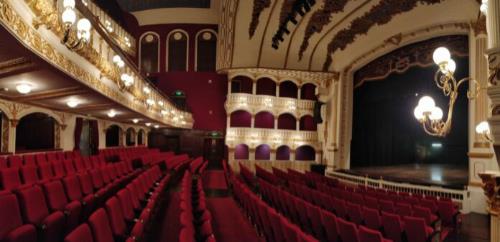
Every architectural detail, from royal boxes to ornate chandeliers, was meticulously restored, while the venue was upgraded with state-of-the-art acoustics, lighting, stagecraft, and air-conditioning. The project received global recognition with an Award of Merit at the 2017 UNESCO Asia-Pacific Awards for Cultural Heritage Conservation.
“The Opera House is not a monument we are guarding. It is a living space we are offering to the city of Mumbai,” notes Shri Himanshusinhji of Gondal, who currently leads the institution.
Over the past decade, that vision has translated into meaningful cultural impact, including academic recognition through research presented by Curator, Asad Lalljee at international forums such as the Association for Cultural Economics Conference (Indiana University, 2023) and the International Conference on Arts and Cultural Management (University of Lisbon, 2024).
Programming With Purpose: A ‘Multiverse’ Approach to Cultural Relevance
Since reopening in October 2016 through December 2025, the Royal Opera House Mumbai has hosted over 1,000 programs, welcoming nearly 230,000 attendees, despite a two-year pandemic closure.
At the heart of this success lies what the team calls “Multiverse Programming,” a genre-agnostic, experience-led curatorial philosophy designed to appeal to both traditional patrons and younger audiences.
Curator Asad Lalljee explains, “At the heart of this resurgence lies a genre-agnostic, experience-led curatorial philosophy. Children’s literature festivals sit alongside international classical concerts. Architecture dialogues share space with contemporary dance and policy symposia.”
This programming strategy focuses on three pillars:
- Range spanning classical music, theatre, literature, cinema, and experimental performances
- Access providing a platform for both global names and emerging local talent
- Adaptability blending physical and digital experiences
The result is a diverse lineup that has included productions such as Jazz Meets Kathak: Two Worlds, One Stage, featuring international jazz musicians alongside Indian classical dance performers, as well as regional theatre festivals in Marathi and Gujarati that have broadened the venue’s audience base.
This multidisciplinary approach has allowed the Opera House to evolve beyond a traditional performance venue into a cultural hub for dialogue, creativity, and artistic experimentation.
A Premium Cultural Venue in a City of Mega Spaces
In Mumbai’s landscape of large convention centres and contemporary entertainment venues, the Royal Opera House has positioned itself as an intimate, premium cultural destination.
“With a seating capacity of 575, our scale is not a limitation. It is what makes an evening here feel personal and distinct,” says Hon. Director Ashish Doshi.
This intimacy creates a closer connection between performers and audiences. This becomes a key differentiator for curated performances, leadership dialogues, literary events, and high-value experiential formats.
The venue has hosted:
- Leadership and creative economy dialogues
- International cultural festivals
- Literary previews and book launches
- Diplomatic and cultural exchange events
- Regional theatre festivals
Additionally, the Opera House’s privately funded model, supported by the Royal Family of Gondal, allows it to operate as an independent platform for curated cultural expression. This makes it an attractive venue for premium and purpose-driven events.
Where Heritage Meets Experiential Performances
As experiential performance continues to evolve, venues are increasingly becoming part of the storytelling canvas. The Royal Opera House Mumbai has embraced this shift.
“Collaboration is our mantra,” says the team, highlighting partnerships with artists, creators, production houses, and brands to create immersive audience experiences.
Curator Asad Lalljee adds, “The venue becomes part of the story, not just the setting.”
These collaborations extend beyond traditional sponsorships and include:
A recent example includes the Canada-India Creative Industries Roundtable held in February 2026, attended by Canada’s Minister of Foreign Affairs, Anita Anand. The event demonstrated how the Opera House serves as a platform at the intersection of culture, business, and innovation.
For brands seeking premium, culturally rich environments, the Opera House offers a compelling alternative to conventional venues. It blends heritage with experiential storytelling
The Next Chapter: Global Collaborations and New Formats
As the Royal Opera House marks a decade since reopening, the focus now shifts to expanding international collaborations and exploring new formats at the intersection of art, technology, and design.
One of the most anticipated collaborations is with Teatro Real, the Royal Opera of Madrid, as part of Spain - India Dual Year 2026. The partnership will culminate in a flamenco performance at the Royal Opera House on May 29.
Looking ahead, the venue plans to:
- Expand international cultural collaborations
- Introduce interdisciplinary programming
- Strengthen youth audience engagement
- Deepen brand and creator partnerships
The goal is to position Mumbai within global cultural conversations while staying rooted in Indian heritage.
As the venue steps into its next decade, the Royal Opera House Mumbai stands as a compelling example of how heritage venues can evolve into dynamic platforms for live experiences, premium events, and experiential storytelling. It offers inspiration for event professionals, brand marketers, and cultural creators alike.
In an industry constantly chasing the new, the Royal Opera House Mumbai proves that sometimes, the most powerful experiences are built on legacy, thoughtfully reimagined for the future.